Why We Don't Use Seed Oils: The Science Behind Our Choice
Seed oils are in far more of your groceries than you think. Here's what a PUFA actually is, why the ratio matters, and why our clusters don't need an oil at all.
Walk through any grocery store, and you'll find seed oils — canola, soybean, corn, sunflower, safflower, cottonseed, grapeseed, rice bran — in almost everything. At CrunchCraft, we made the deliberate choice to leave them out entirely. Here's the reasoning, including the parts that are genuinely unsettled.
First, What a PUFA Actually Is
Most of the seed-oil conversation turns on a three-letter acronym that rarely gets explained, so let's start there.
A fat is a chain of carbon atoms. What makes one fat different from another is how those carbons are bonded together.
- Saturated fat has no double bonds in the chain. Every available spot is filled — "saturated" with hydrogen. Butter, coconut, beef fat.
- Monounsaturated fat has exactly one double bond. Olive oil, avocado, macadamias, almonds.
- Polyunsaturated fat (PUFA) has two or more. Linoleic acid, the omega-6 that dominates seed oils, has two. Alpha-linolenic acid, an omega-3, has three.
A double bond is a kink in the chain, and it's also a weak point. The carbon sitting between two double bonds gives up a hydrogen atom easily, and once oxygen takes it, the molecule starts a chain reaction that pulls in the fat molecules around it. That process is called lipid peroxidation, and it's why polyunsaturated oils go rancid faster than olive oil, and much faster than butter.
More double bonds means more places for that to start. It's not a value judgment, it's chemistry — and it's the reason the same oil behaves very differently sitting in a warehouse for eight months than it does fresh.
Why "Too Much Omega-6" Is a Ratio Problem, Not a Poison Problem
Omega-6 and omega-3 are both essential. Your body can't make either one, and you would get sick without them. Nobody serious argues for zero.
The concern is about proportion, and the mechanism is specific: omega-6 and omega-3 fats compete for the same enzymes. The conversion of plant omega-3 (ALA, from flax, chia, walnuts) into the forms your body actually uses (EPA and DHA) runs through an enzyme called delta-6 desaturase. Linoleic acid — omega-6 — uses that same enzyme. Flood the system with omega-6 and less of your omega-3 completes the trip.
So a diet can be technically adequate in omega-3 and still function as though it isn't, because the omega-6 is crowding the line.
Estimates put the modern Western ratio somewhere around 15:1 or 20:1 omega-6 to omega-3, against something closer to 1:1 or 4:1 for most of human history. Those ancestral numbers are reconstructions and should be read as estimates, not measurements. But one number isn't an estimate at all: the linoleic acid stored in Americans' own body fat roughly doubled between the late 1950s and 2008, from about 9% of fatty acids to about 21%. Body composition is downstream of diet, and it changed.
The change has a clear source. Soybean oil consumption in the United States rose more than a thousandfold over the twentieth century. This is not a food humans have long experience with.
How These Oils Are Made
A seed is not an obvious thing to get oil out of. You can squeeze an olive or a coconut; a soybean is about 20% oil by weight and does not give it up willingly.
The industrial process is: clean and crush the seeds, heat them, then wash them with hexane — a petroleum solvent — to pull out the remaining oil. What comes back is dark, smells strongly, and tastes bad, so it's refined, bleached, and deodorized at temperatures above 400°F. That last step strips the smell and color, and also creates small amounts of trans fats as a byproduct.
The oil that reaches the shelf is neutral, pale, and cheap. All three are the point. None of them are accidents.
The Part Where We Are Honest With You
Here is what we won't tell you: that seed oils are established as harmful in humans.
They aren't. Controlled trials that swap saturated fat for polyunsaturated fat generally show LDL cholesterol going down, not up, and several large reviews find fewer cardiovascular events. Studies that measure linoleic acid in people's blood rather than asking them what they ate mostly find it neutral or mildly protective. The American Heart Association's position — that replacing saturated fat with vegetable oil is beneficial — is a defensible reading of the trial evidence.
The counter-arguments are also real: most of that research compares seed oils to butter and lard rather than to a diet with less processed fat in it altogether, the trials mostly ran for a few years rather than a few decades, and oxidation products formed in storage and in restaurant fryers aren't what a clinical trial hands people in a bottle.
We don't think that's settled. We think it's contested, and that honest people land on both sides of it.
Where They Actually Are
The reason this matters isn't the bottle in your cabinet. Most people cook with olive oil or butter at home and assume that settles it. Seed oils come in through the packaged aisles, and often through the products marketed as the healthy option.
- Salad dressing. The single most common surprise. Turn over a bottle branded around olive oil or avocado and you'll frequently find soybean or canola listed first, with the premium oil well down the list. "Natural," "simple," and "made with olive oil" are all compatible with this.
- Protein bars and meal-replacement bars. The great majority contain palm or a seed oil, usually to control texture.
- Boxed cereal. Including the high-fiber and "whole grain" ones.
- Roasted nuts. A can of roasted almonds is frequently roasted in sunflower or cottonseed oil. Dry-roasted and raw are the versions that aren't.
- Hummus, mayo, pesto, and most jarred sauces. Often soybean oil by volume, whatever the front of the jar is about.
- Plant-based milks and coffee creamers. Sunflower or canola oil is what makes them creamy.
- Crackers, chips, tortillas, and sandwich bread.
- Restaurant food. Fryers are seed oil almost universally, on cost grounds, and so is the film on most flattop grills. A grilled chicken salad with dressing can carry more of it than a home-cooked meal in a week.
Read ten labels in your own kitchen and the picture usually changes. That's the exercise worth doing — not swapping one bottle.
We Didn't Replace Them With Anything
An oil in a packaged snack is doing a job. It crisps things, it carries flavor, it keeps a texture stable on a shelf, it binds loose ingredients into a shape that survives shipping.
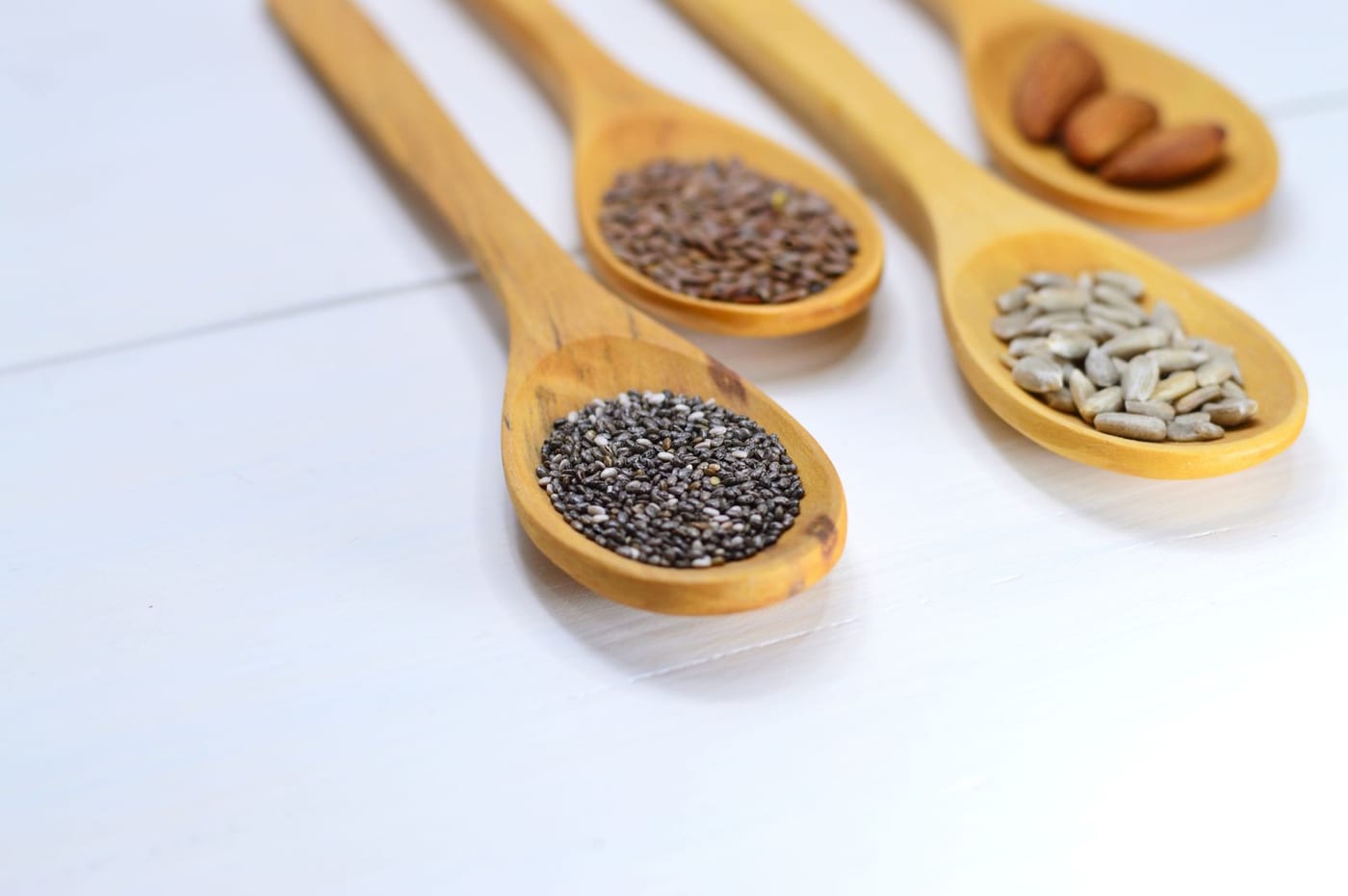
Our clusters don't have those problems to solve. Every gram of fat in the bag is already there, inside the almonds, walnuts, sunflower seeds, flax and chia — whole, intact, still surrounded by the vitamin E and polyphenols that grew alongside it. Dried egg white does the binding. Nothing is fried, so nothing needs a frying medium. We add no fat of any kind.
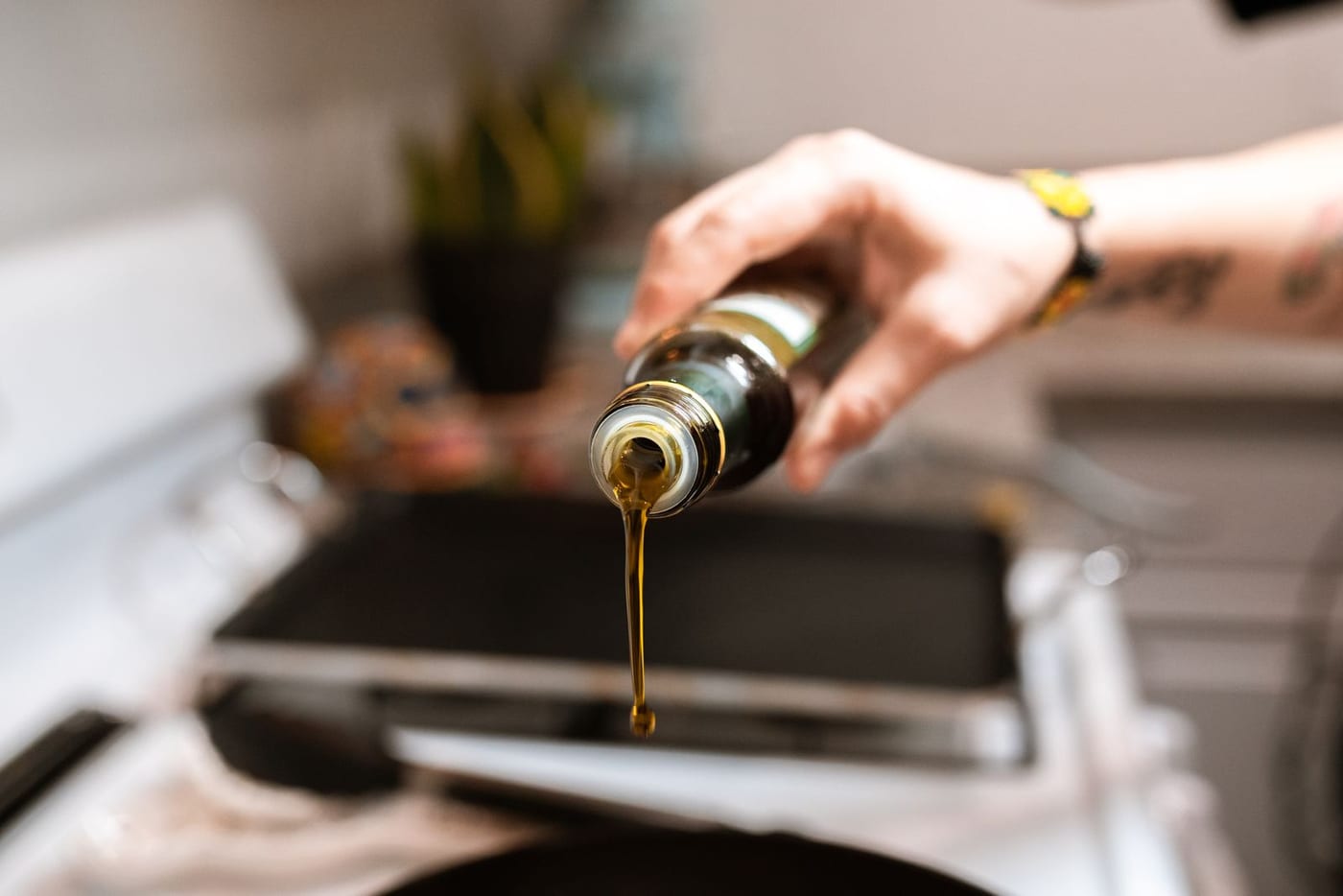
Which is worth sitting with for a second, because sunflower seeds are in the bag and sunflower oil is not. That isn't a contradiction; it's the whole distinction. A sunflower seed is a fat delivered in the package nature built for it, in the quantity a seed holds, alongside the antioxidants that keep it stable. Sunflower oil is that fat extracted from thousands of seeds, stripped of everything that was protecting it, and poured. Same plant, different food.
So there is no substitution to announce. We didn't find a better oil. We built a product that never needed one, which is a different and easier thing.
Our Position
We're not here to demonize an ingredient, and we're not going to claim a scientific consensus that doesn't exist. What we'll say is narrower and, we think, more defensible: these oils are new to the human diet, they're fragile by their chemistry, they're consumed at volumes without historical precedent, and the long-term evidence is incomplete in both directions.
Given all that, and given that our product doesn't need them, leaving them out costs us nothing and removes a question mark. We'd rather make the choice that doesn't require the science to come out a particular way.
That's the CrunchCraft difference.
This article is general information and is not medical or nutritional advice. If you have questions about the fats in your diet, a registered dietitian or your doctor can give you an answer tailored to you.
Photo by RDNE Stock project on Pexels.
Enjoyed this article? Share it with others:
Stay in the Loop
Get the latest health tips, product updates, and exclusive offers delivered straight to your inbox. No spam, just good stuff.
We respect your privacy. Unsubscribe at any time.